
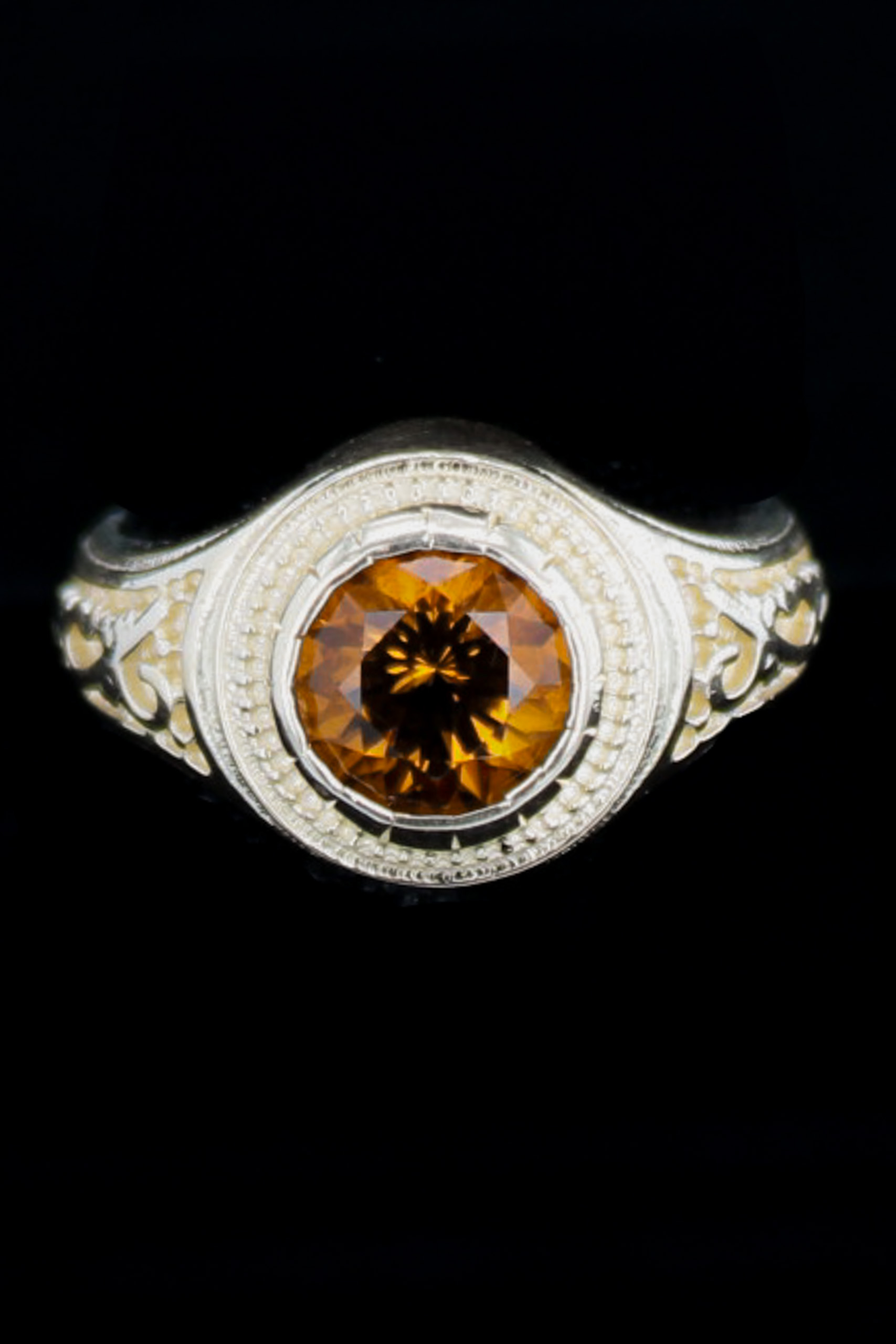
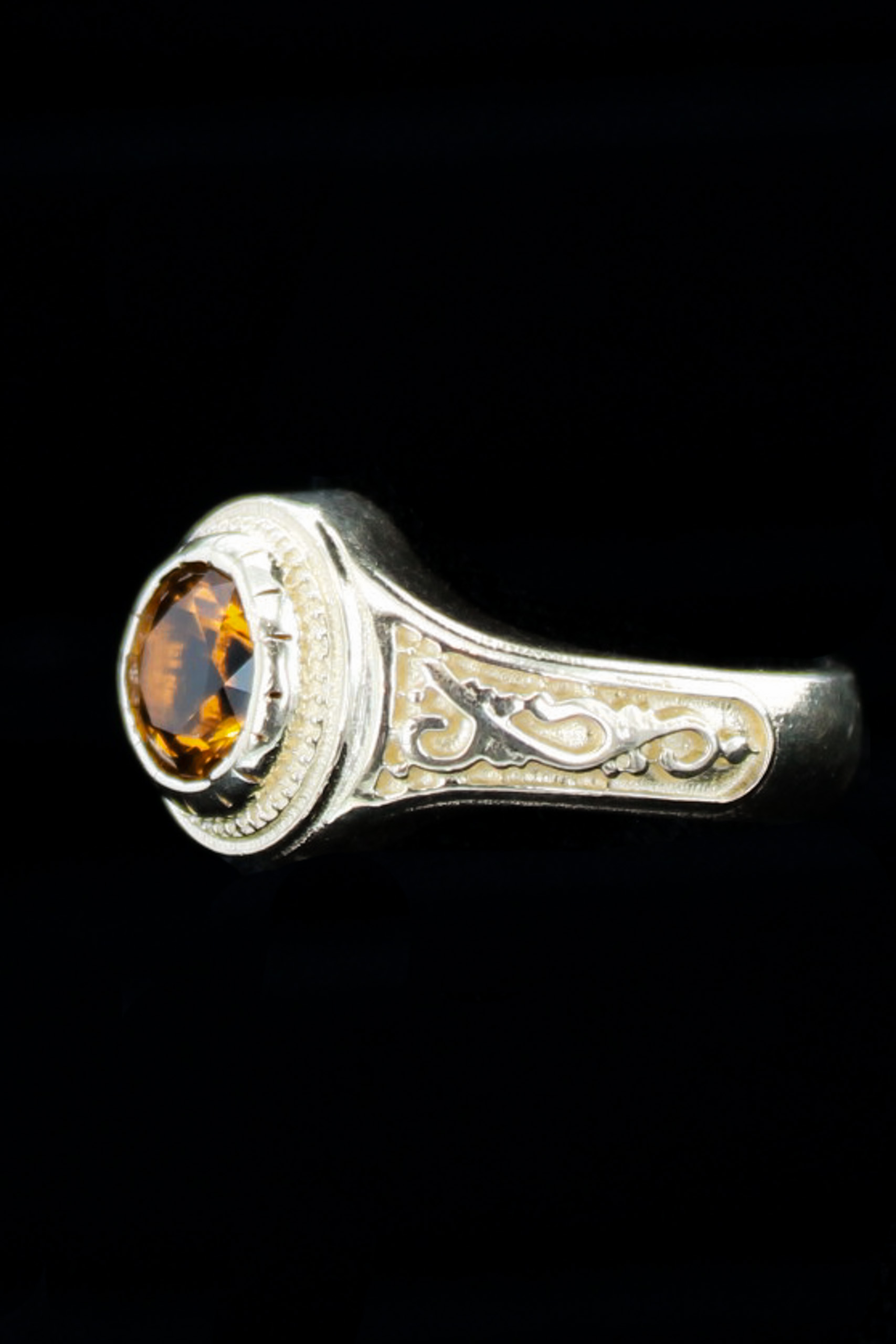
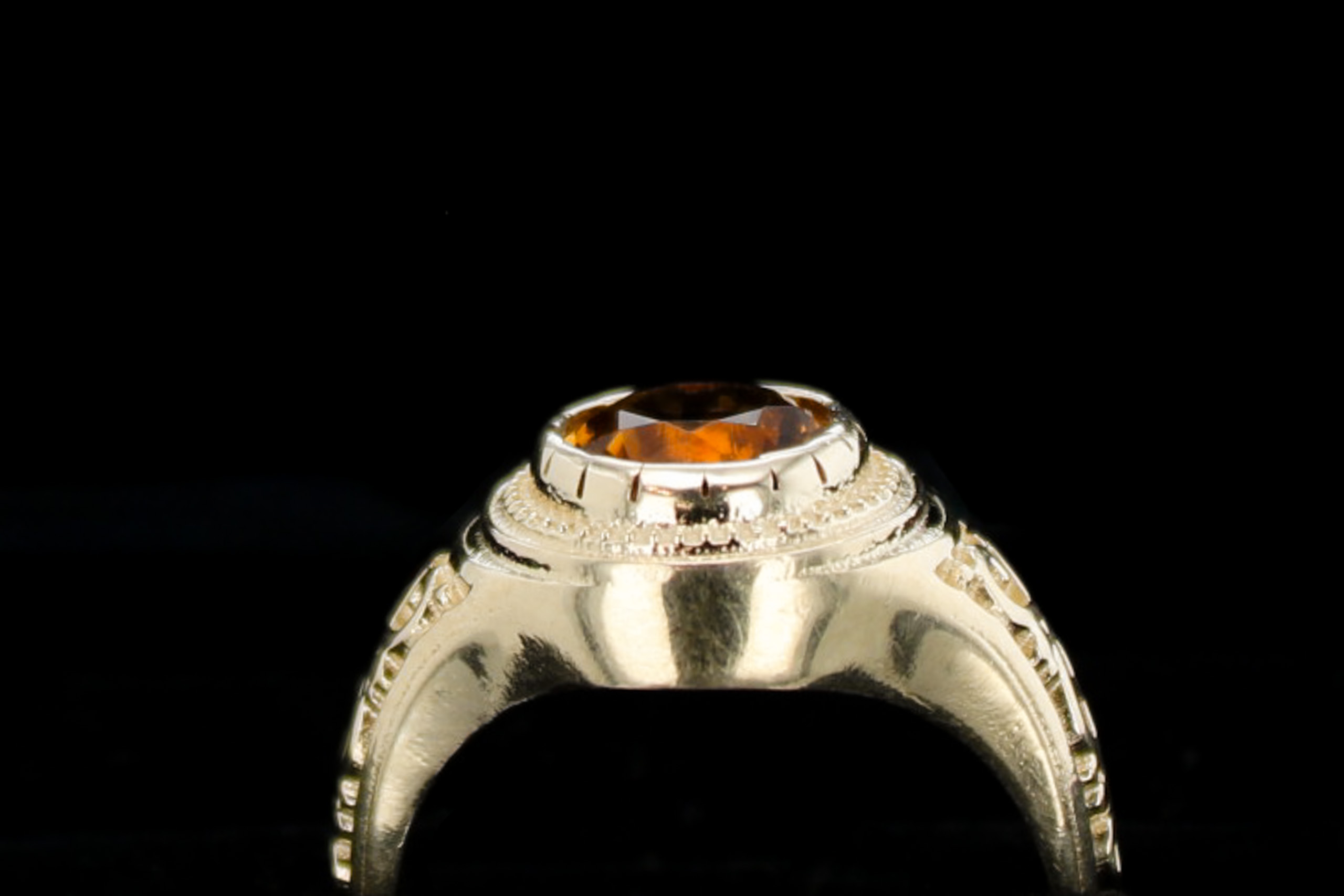


14k Solid Yellow Gold and Natural Citrine Ring
$3,200.00 plus tax
14k Solid Yellow Gold and Natural Citrine Ring
One Round Sunburst Cut Citrine
Original One of a Kind Piece
Out of stock
Citrine has been used since ancient Egyptian times, where it was placed in tombs and amulets for protection in the afterlife, believed to ward off evil and bring warmth and light to the wearer. The ancient Greeks and Romans prized citrine for its aesthetic appeal and protective powers, often using it in jewelry, intaglio carvings, and rings. Its name derives from the Latin citrus (citron tree) and the French citrin, reflecting its lemon-like color.
Citrine gained renewed attention during the Art Deco period, often featured in Hollywood jewelry and elaborate designs. Today, it remains a popular gemstone in both jewelry and spiritual practices, symbolizing abundance, joy, and confidence. Its enduring appeal reflects both its physical beauty and its historical significance across cultures.
Citrine’s history is thus a rich tapestry of ancient symbolism, royal patronage, and global mining, making it one of the most cherished yellow gemstones in human history.
| Ring Sizes | 5, 5 1/2, 6, 6 1/2, 7, 7 1/2, 8, 8 1/2, 9, 9 1/2 |
|---|
Related products


